Digital Donor Walls in Cultural Institutions
By Acid Concepts · · 2 min read
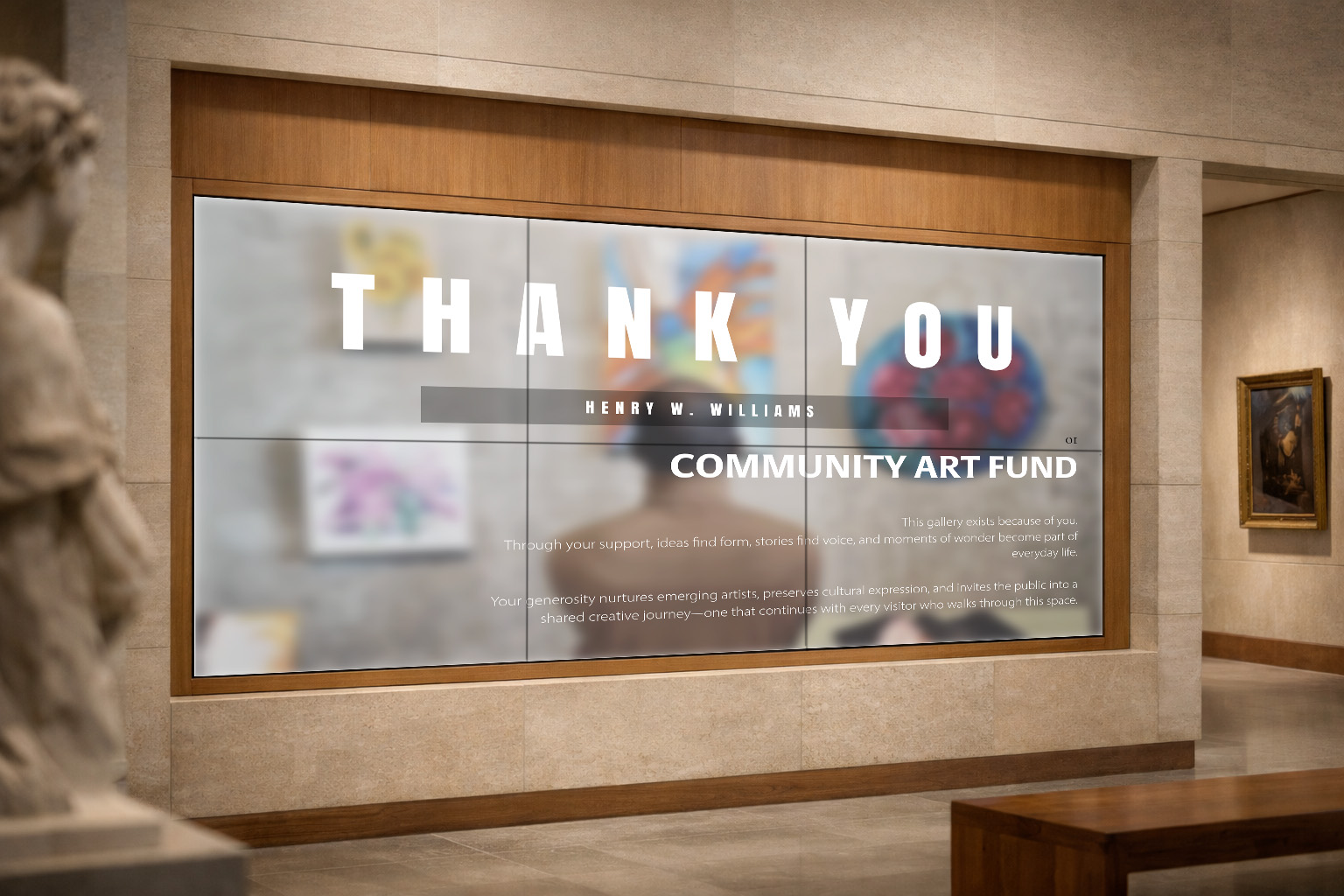
In cultural institutions, donor recognition must support storytelling without disrupting the experience. Digital donor walls make it possible to acknowledge patrons, adapt to changing programs, and integrate recognition seamlessly into exhibitions and public spaces.
When Recognition Becomes Part of the ExperienceCultural institutions are places of meaning. Museums, galleries, and performing arts venues exist to tell stories, preserve history, and invite reflection. Donor recognition in these spaces must support that mission, not compete with it.
Traditional donor walls have long played a role in acknowledging patrons and benefactors. While familiar, they often sit apart from the visitor experience, separated from exhibitions and programming.
Digital donor walls allow recognition to become part of the story rather than a separate object.
The Cultural Context Is Different
Unlike corporate or commercial environments, cultural spaces are carefully curated. Every visual element is intentional. Every interruption is noticed.
This creates specific challenges for donor recognition:
• Recognition must not distract from exhibitions
• Design integrity must be preserved
• Content needs to change with seasons and programs
• Patron hierarchies must be handled with subtlety
• Technology should feel invisible, not dominant
Static donor walls often struggle to meet these expectations over time.
Recognition That Belongs in the Space
Digital donor walls can be designed to feel like part of the institution rather than an add on.
When done well, they allow recognition to sit alongside interpretation and storytelling by:
• Integrating donor acknowledgment into exhibition narratives
• Connecting patrons to specific programs or works
• Reflecting seasonal and rotating content
• Supporting multiple languages and accessibility needs
Recognition becomes contextual rather than isolated.
Supporting Patrons and Programming
Cultural institutions rely on a wide range of supporters, from major patrons to community donors. Digital donor walls make it possible to recognize these relationships with clarity and respect.
They can support:
• Patron recognition by exhibition or season
• Campaign specific storytelling
• Long term supporter histories
• Behind the scenes insight into funded work
This approach reinforces the connection between generosity and cultural impact.
Multi Purpose Without Compromise
One of the strongest advantages of digital donor walls in cultural spaces is flexibility without visual compromise.
The same installation can be used for:
• Donor and patron recognition
• Exhibition introductions
• Educational and interpretive content
• Event and performance messaging
• Institutional announcements
This ensures the wall remains useful year round while maintaining a consistent visual language.
Design Restraint Matters
Technology in cultural institutions should never feel like a feature. It should support the experience quietly.
Effective digital donor walls prioritize:
• Refined typography
• Minimal motion
• Balanced composition
• Content led design
• Alignment with curatorial values
When restraint is respected, the wall feels timeless rather than trendy.
Long Term Value for Evolving Institutions
Cultural organizations evolve continuously. Exhibitions change. Programs rotate. Donor communities grow.
Digital donor walls are built to support this reality by allowing:
• Content updates without physical intervention
• Adaptation to new exhibitions and narratives
• Continued relevance across years of programming
• Reduced long term replacement costs
Instead of becoming outdated, the wall evolves alongside the institution.
Final Thought
In cultural institutions, donor recognition should never feel separate from the experience. It should reinforce purpose, support storytelling, and respect the space.
Digital donor walls make this possible by allowing recognition to adapt, integrate, and remain relevant without compromising design integrity.
They are not about adding technology. They are about using it carefully, in service of culture.
Discuss this with our team: start your project.