Designing Employee Recognition Systems That Show People Why They Matter
By Acid Concepts · · 2 min read
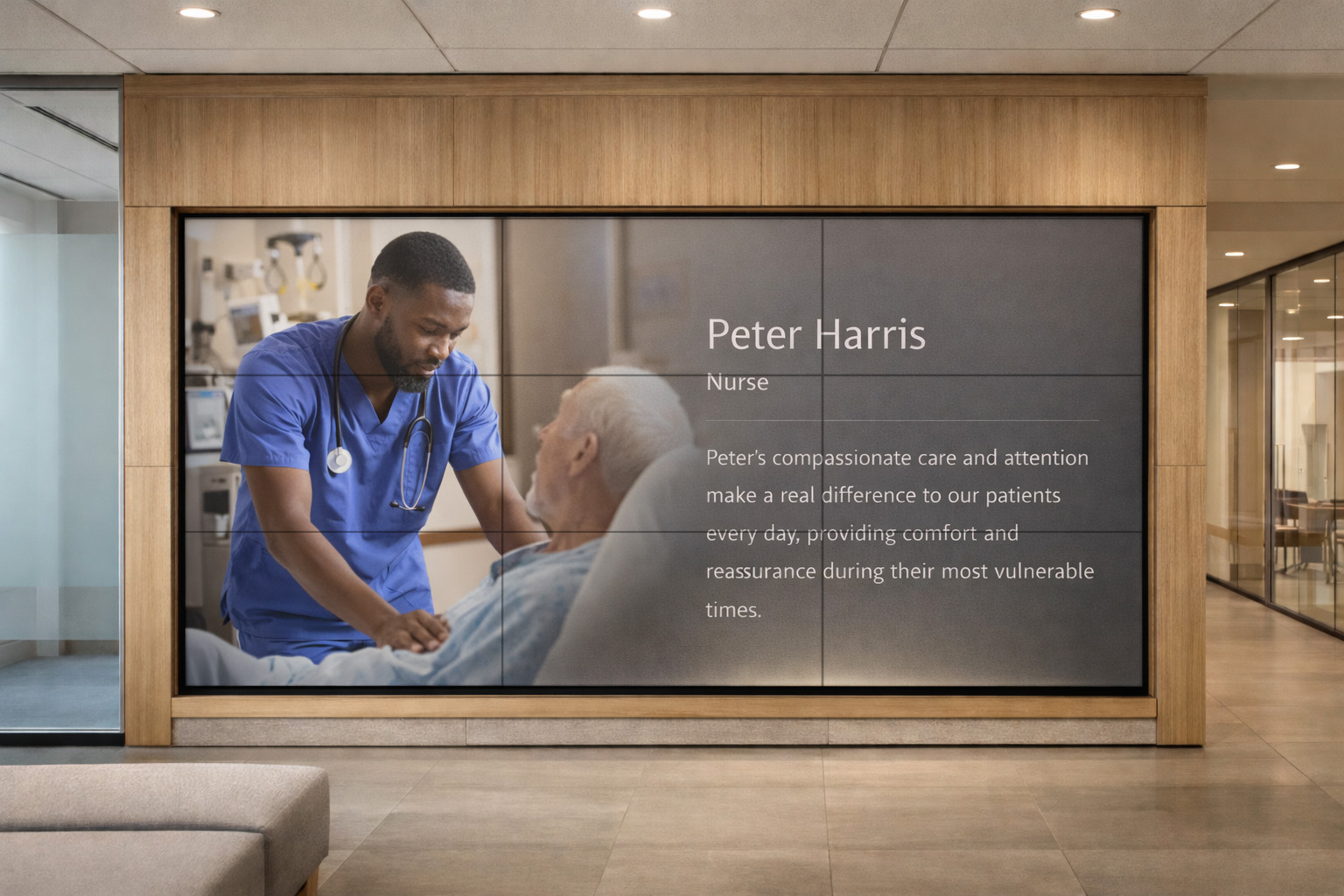
Employee recognition only works when people feel seen. This article explores why recognition must center human stories, purpose, and impact, and how digital and physical spaces can be designed to show genuine care rather than obligation.
Recognition Exists to Make People Feel SeenEmployee recognition fails the moment it feels procedural.
When recognition becomes a list, a screen rotation, or a compliance task, employees notice immediately. What was meant to show appreciation instead signals distance. It feels like something the organization is doing because it has to, not because it cares.
Real recognition answers a simple question.
Why does my work matter here?
If a recognition system cannot answer that clearly, it does more harm than good.
People Do Not Connect With Lists
Names alone do not communicate meaning.
Years of service do not explain contribution.
Values without context feel abstract.
Generic praise feels interchangeable.
When recognition systems reduce people to entries on a wall, they remove the very thing they are meant to honor.
People connect with stories. They connect with faces, moments, and purpose. They connect when they see themselves reflected in the work.
Work Has Meaning Because It Serves Others
In hospitals, employees show up for patients and families.
In universities, they support students, research, and learning.
In offices, they build systems, teams, and outcomes that others depend on.
Recognition should make that visible.
A strong recognition system shows:
Who this person is
What they do
Who benefits from their work
Why it matters to the institution
This is not about celebration. It is about acknowledgment with clarity and respect.
Recognition Should Lead With Humanity
In physical and digital spaces, the most powerful recognition systems lead with people, not structure.
That means:
Images of employees in their real working environments
Moments of care, focus, collaboration, and pride
Context that explains impact, not just achievement
The image carries the emotion.
The text provides meaning.
The system supports continuity.
When people see recognition like this, they understand it was designed with intention.
Systems Exist to Support Gratitude, Not Replace It
Technology does not create appreciation. It only amplifies what already exists.
A well designed recognition system allows organizations to:
Share human stories consistently
Update recognition without erasing meaning
Ensure appreciation is visible across spaces
Scale gratitude without turning it into noise
The system should never compete with the person. It should quietly support the story being told.
Authenticity Over Frequency
Recognition does not need to be constant to be effective.
In fact, too much recognition without depth becomes background noise. What matters is authenticity.
Strong systems prioritize:
Fewer moments with more meaning
Clear connection between values and action
Respectful pacing and tone
Space for stories to breathe
When recognition feels considered, it earns trust.
Recognition Shapes Culture Every Day
Employees learn what an organization values by what it chooses to make visible.
Who is recognized.
Why they are recognized.
How that recognition is shared.
These signals shape culture quietly and continuously.
When recognition systems show real people, real work, and real impact, they reinforce belonging. They remind employees that their effort matters beyond metrics.
Final Thought
Employee recognition should never feel like an obligation.
It should feel like gratitude made visible.
When recognition systems are designed to center human stories, they show people why their work matters and why they matter to the institution. Technology then becomes what it should be. A tool that helps care be seen, shared, and sustained over time.
If recognition cannot do that, it should be redesigned.
Discuss this with our team: start your project.