Interactive Projection
Interactive projection walls and floors, plus projection mapping on buildings, objects and rooms.
Overview
Projection can turn almost any surface into a canvas: a lobby floor that ripples when children run across it, a gallery wall that responds to a wave, a building facade that comes alive at night, a room that becomes a forest. Acid Concepts designs and builds interactive projection and projection mapping installations, from projector placement and motion tracking to the custom content and software that make them feel effortless.
We have worked in sensor-driven environments and responsive media since 1999. We treat projection as one option among several, and recommend it when it is the best fit for the surface, the light and the budget.
What is interactive projection?
Interactive projection combines projectors with sensors so projected content responds to people. Cameras or infrared sensors detect where visitors are and what they are doing, and the software changes the image in real time.
- Interactive projection floors. Content on the floor reacts to footsteps and movement, ideal for play, waiting areas and exhibits.
- Interactive projection walls. A projected wall responds to touch, gesture or presence, often at a scale that would be costly with screens.
- Interactive tables and objects. Projection onto tables, models or props that respond to touch or placed objects.
What is projection mapping?
Projection mapping (also called 3D projection mapping or spatial projection) is the technique of fitting projected content precisely to the shape of a surface or object, rather than a flat rectangle. It is used to:
- Animate building facades, architectural features and stages
- Bring physical models, sculptures and scenic elements to life in museums and sales centres
- Wrap several walls of a room into one seamless immersive picture (see Immersive Spaces)
- Create launch moments and brand reveals
Interactive projection and projection mapping are often combined: a mapped surface that also responds to visitors.
Who interactive projection is for
- Museums, science centres and children's museums wanting playful, physical exhibits. See Interactive Museum Exhibits.
- Resorts, hotels and family attractions creating kids' clubs, lobbies and evening moments.
- Brands and experiential agencies planning launches, activations and reveals. See Custom Interactive Applications and Games.
- Property developers using mapped models and projected master plans in sales centres.
- Healthcare and children's hospitals where movement-based, playful spaces can lift the experience for patients and families.
- Retail and shopping centres adding destination moments.
How interactive projection works: hardware and software
Hardware
- Projectors. Chosen for brightness, throw distance, resolution and the ambient light in the space. Larger surfaces use several projectors with edge blending to create one seamless image.
- Sensors. Depth cameras, infrared sensors and our own IR-based touch and touchless sensing to detect movement, touch and presence on walls and floors.
- Mounting. Ceiling or wall mounts positioned to avoid shadows from visitors, with safe access for maintenance.
- Media servers and control. Hardware to render and synchronize content, plus a simple control interface for staff.
- Audio. Sound effects and spatial audio that make the interaction feel physical.
Software
- Warping, blending and mapping to fit content precisely to walls, floors, objects and architecture
- Real-time motion tracking and interaction for single visitors or groups
- Custom content and games, designed for the surface and the audience
- Scheduling, attract modes and presence triggers
- Calibration tools that keep alignment accurate over time
- Monitoring and alerts for lamp or laser hours, sensor status and system health
Our process and timeline
- Discovery call (free, 20 minutes). The surface, the space, the light, the audience and the goal.
- Strategy and concept. 2-3 concept directions, a realistic scope and timeline, and similar projects.
- Design and build, in-house. Projection and sensor design, content and software, often tested with a site mock-up or prototype.
- Installation and calibration. Mounting, alignment, blending, sensor calibration and staff training.
- Support. Monitoring, re-alignment, content updates and maintenance.
Timing depends on surface size and complexity, how much content is created from scratch, interactivity and site access. We confirm a realistic schedule after the discovery call.
What shapes the scope of an interactive projection project
Every projection project depends on the surface, the light and the idea, so we scope each one individually. The things that shape the project are:
- Size: the surface area and the number of projectors needed to cover it.
- Hardware: projectors, sensors and mounting, ambient light, and whether hardware is already in place.
- Content: how much original content is produced and how it is mapped to the surface.
- Interactivity: whether the projection plays a show or responds to touch, gesture or movement.
- Integration: site conditions, mounting points, power and coordination with other trades.
- Timeline: your opening or event date.
- Support: calibration, monitoring and content updates after launch.
There are often several ways to deliver an idea. On the Nongshim USA room, for example, a walls-and-floor concept was delivered as wall-only projection to focus the scope, with the content redesigned so the impact held.
Every project is scoped individually — tell us about yours.
Projection projects
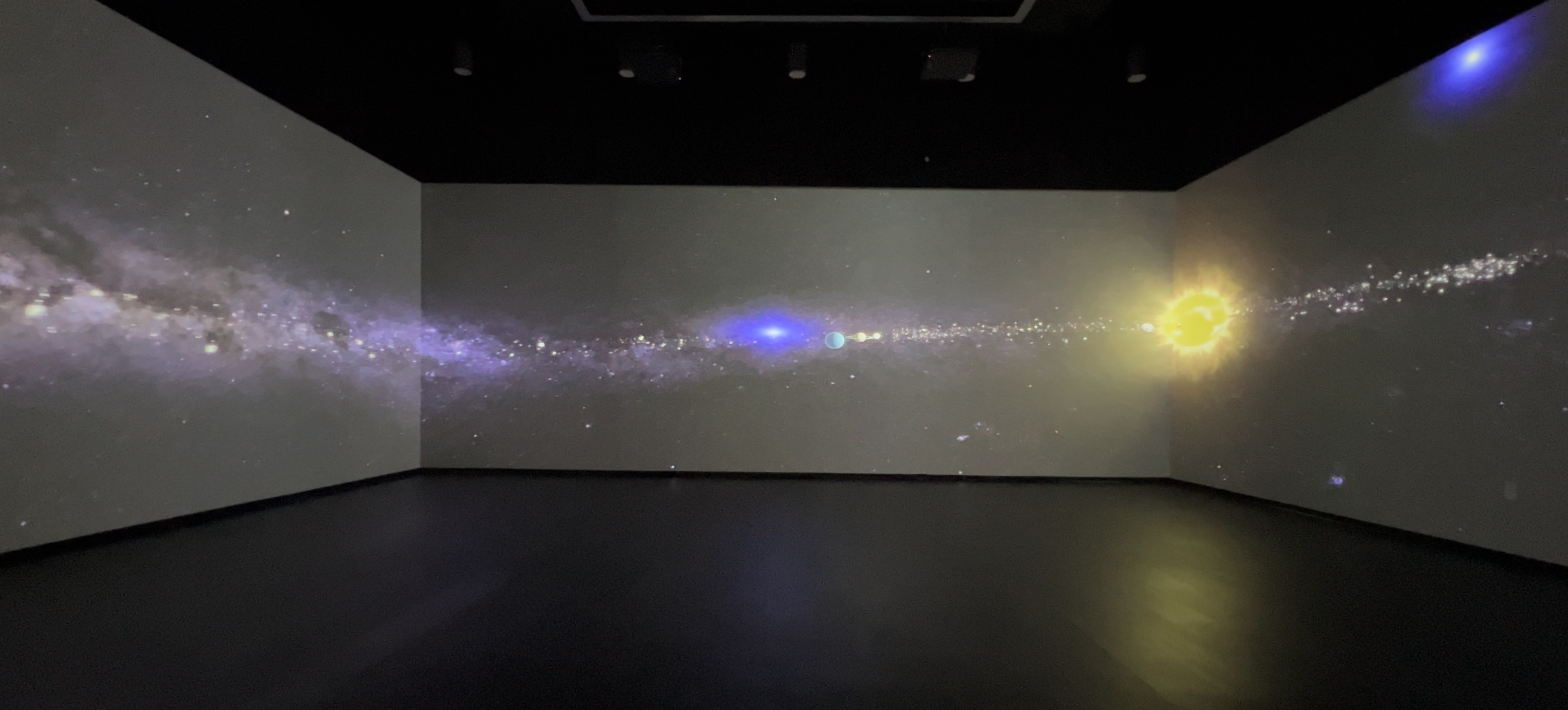
Nongshim USA, Immersive Brand Experience. Wall-to-wall projection with advanced edge blending and spatial sound across a fully enclosed room, taking visitors on a cinematic journey that ends with Nongshim's Shin Ramyun, with interactive moments for zooming and focused exploration. See the Nongshim project.
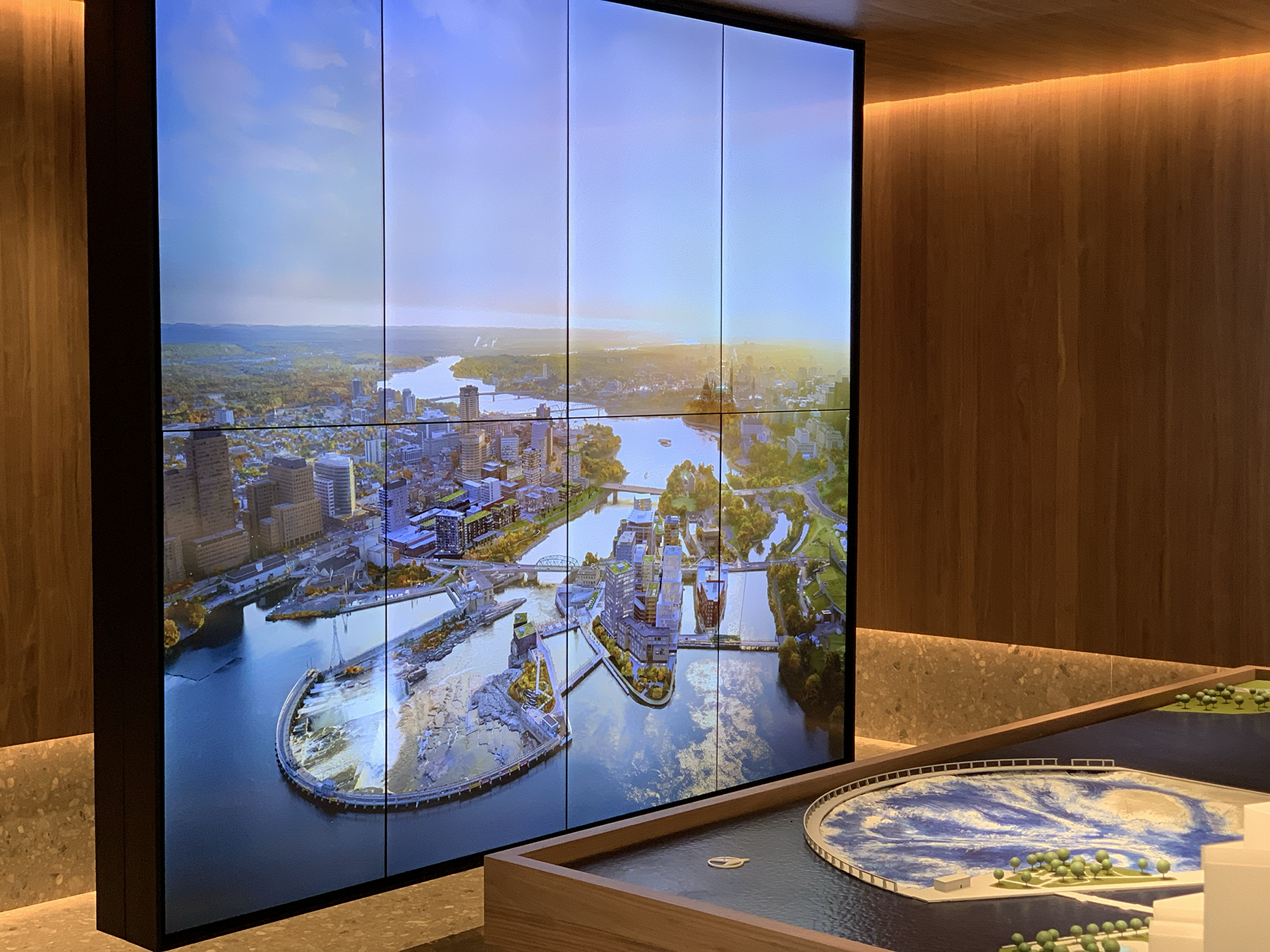
Zibi Sales & Discovery Centre. Interactive projections, video walls, gesture-based interaction and motion tracking used to help visitors explore a major waterfront development in Ottawa–Gatineau. See the Zibi project.
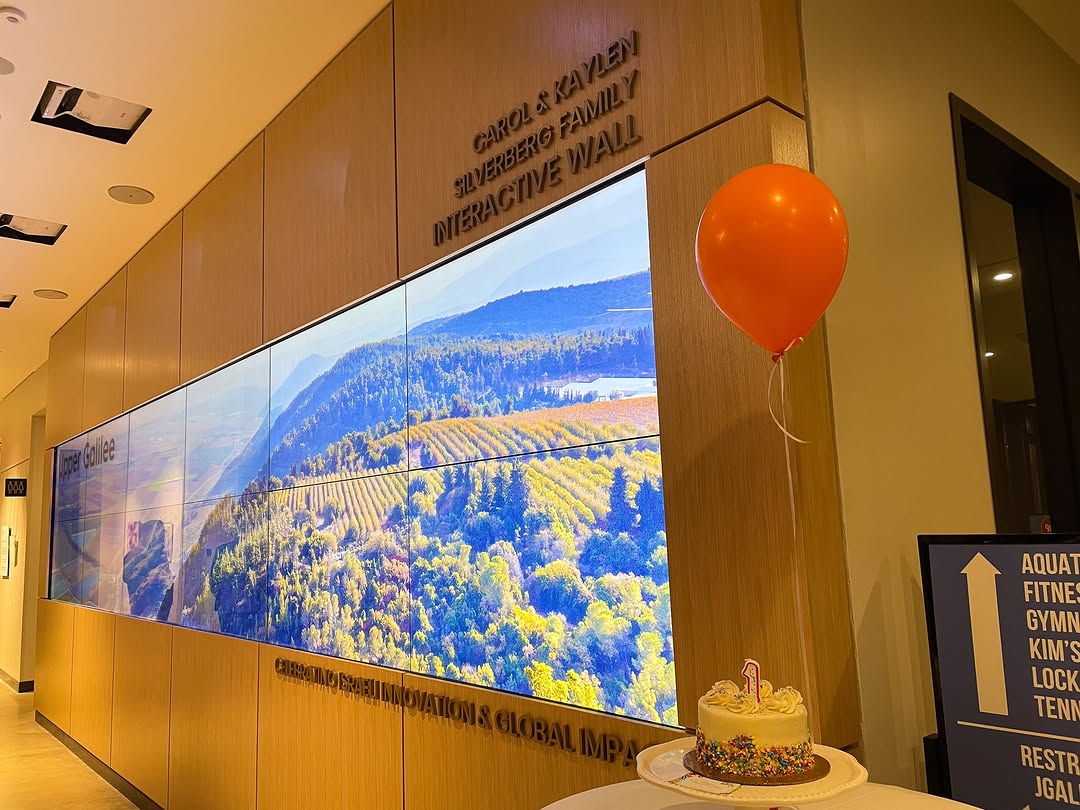
Shalom Austin, Interactive Israel Wall. A permanent multimedia installation at the Dell Jewish Community Center combining multi-touch, ultra-narrow video wall displays and projection mapping, delivered with our partner Lusens. We handled the technical build and integration alongside our creative partners. See the Interactive Israel Wall project.
FAQs
How does an interactive projection floor work?
A projector mounted overhead displays content on the floor, and a sensor such as a depth camera or infrared sensor detects where people are standing and moving. Software updates the image in real time, so the floor reacts to footsteps.
What is the difference between projection mapping and regular projection?
Regular projection shows a flat rectangular image on a screen. Projection mapping warps and fits the content to the exact shape of a surface or object, such as a building, a model or several walls of a room.
What shapes the scope of an interactive projection project?
Surface size, the number of projectors, ambient light, how much original content is produced, interactivity, site conditions, your timeline and the support you want. Every project is scoped individually, so tell us about yours.
Is projection or LED better for an interactive wall?
Projection is often more economical for very large or unusual surfaces and works well in controlled light. LED and video walls are brighter and suit spaces with lots of daylight. We recommend the option that fits your space and budget.
Does interactive projection work in bright rooms?
It can, with the right projector brightness and placement, but strong daylight reduces contrast. We assess the light during discovery and suggest projection, LED or a combination.
Can projection mapping be used indoors on small objects?
Yes. Projection mapping works on objects of many sizes, from architectural models and sculptures to scenic elements in exhibits and sales centres.
Start a project
Have a wall, floor or object you want to bring to life? Tell us about the space and what you want people to experience. In a 20-minute call we will share concept ideas, a realistic scope and timeline, and similar projects.
Discuss your project
Related services
- Immersive Spaces: immersive rooms and projection rooms
- AI Integrated Experiences: the motion tracking behind interactive projection
- Interactive Display Walls: LED and LCD interactive video walls
Key features
- Interactive projection floors that react to footsteps
- Interactive projection walls driven by touch, gesture or presence
- Projection mapping on facades, models, sculptures and scenic elements
- Multi-projector edge blending for seamless large images
- Real-time motion tracking for single visitors or groups
- Calibration and monitoring tools that keep alignment accurate
Benefits
- Turns almost any surface into an interactive canvas
- Often more economical than screens for very large or unusual surfaces
- Custom content designed for the surface and the audience
- Supported after launch with re-alignment and content updates
Talk to us about Interactive Projection
Tell us about your space and goals and we'll propose a turn-key approach. Start your project.