Experience Is Not an Interface
By Acid Concepts · · 2 min read
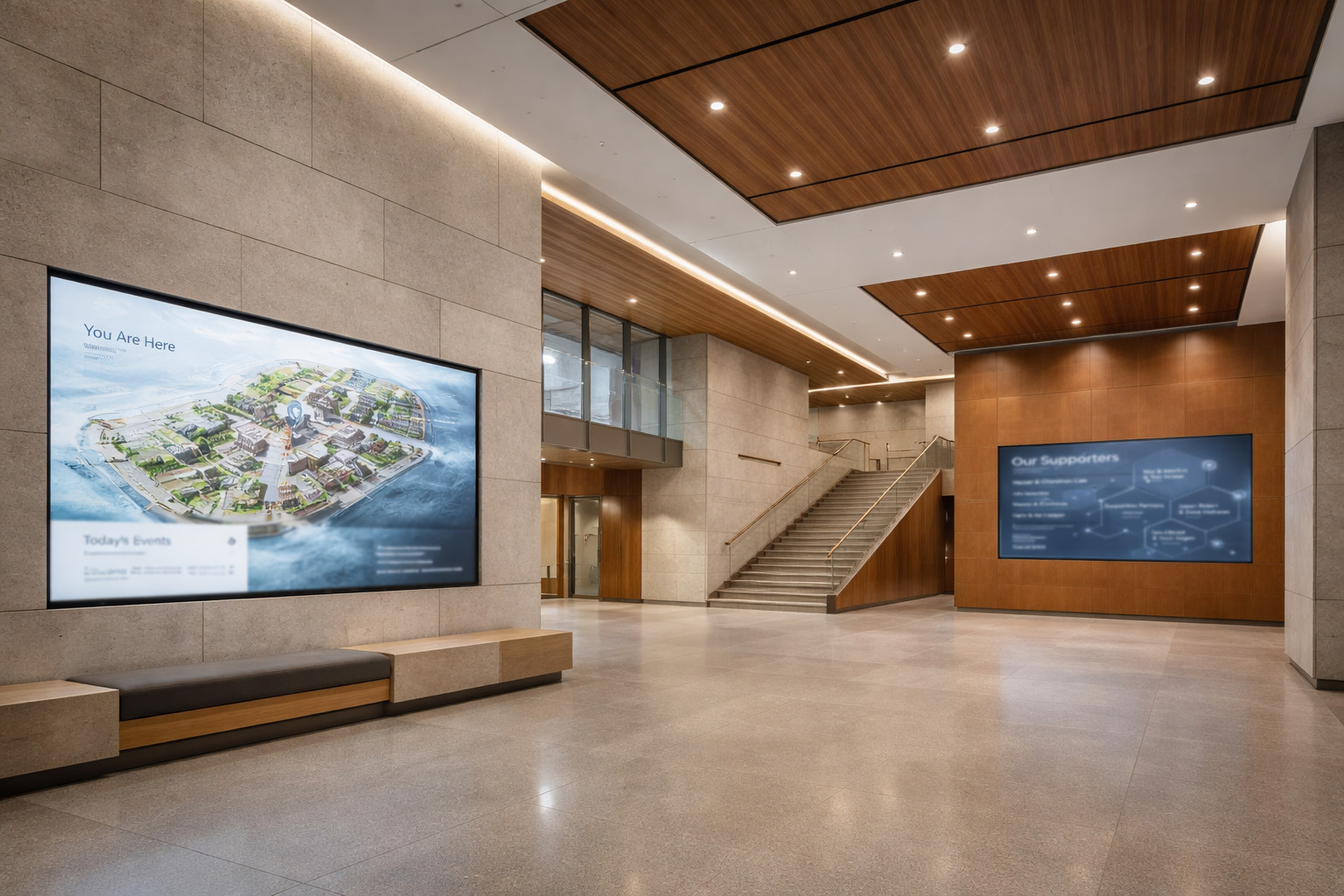
Interfaces are often mistaken for experience. While screens and controls are easy to point to, they are only one part of a larger system. Experience is defined by how people orient themselves, understand what is possible, and decide what to do next. Interfaces sit inside experience, but they do not define it.
Interfaces are often mistaken for experience.Screens, controls, dashboards, touchpoints. These are visible, measurable, and easy to point to. Because of that, they tend to receive disproportionate attention. When something feels unclear or ineffective, the instinct is to redesign the interface.
But interfaces are only one expression of a much larger system.
Experience exists whether an interface is present or not. It exists in how people enter a space, how they orient themselves, how quickly they understand what is possible, and how additional information is revealed over time. Interfaces sit inside experience. They do not define it.
An interface answers the question, how do I interact with this. Experience answers the question, why am I here and what should I do next.
When design focuses too heavily on interface, it often produces technically impressive systems that still feel difficult to use. Not because the controls are wrong, but because the surrounding context has not been shaped. People are asked to make decisions before they feel confident enough to make them.
This is where experience design diverges from interface design.
Experience design is concerned with sequence, pacing, and hierarchy. It decides what is obvious, what is discoverable, and what remains hidden until it is needed. It determines how complexity is introduced without overwhelming the user.
In many of the environments we design, the most important decisions are made before anyone touches a screen. Lighting, spatial layout, movement, and narrative structure are already guiding behavior. The technology supports that flow rather than trying to replace it.
A well designed interface should feel inevitable. It should appear at the moment it is needed and disappear when it is not. When interfaces demand attention for their own sake, they become friction instead of support.
This is why visible technology is not always a sign of sophistication. In mature systems, technology becomes infrastructure. It coordinates information, timing, and response quietly in the background. The success of the system is measured by confidence, not novelty.
Experience design is not about hiding technology. It is about placing it correctly.
When experience leads, interfaces feel simple. When interfaces lead, experience feels fragmented. The difference is not aesthetic. It is structural.
At Acid Concepts, we design technology into spaces, systems, and environments with the goal of reducing uncertainty and supporting real decisions. Sometimes that results in visible interfaces. Often it results in technology that is felt rather than seen.
The most effective experiences are not remembered for their screens. They are remembered for how clear everything felt while moving through them.
This article is part of an ongoing series on experience-led technology design.
Discuss this with our team: start your project.